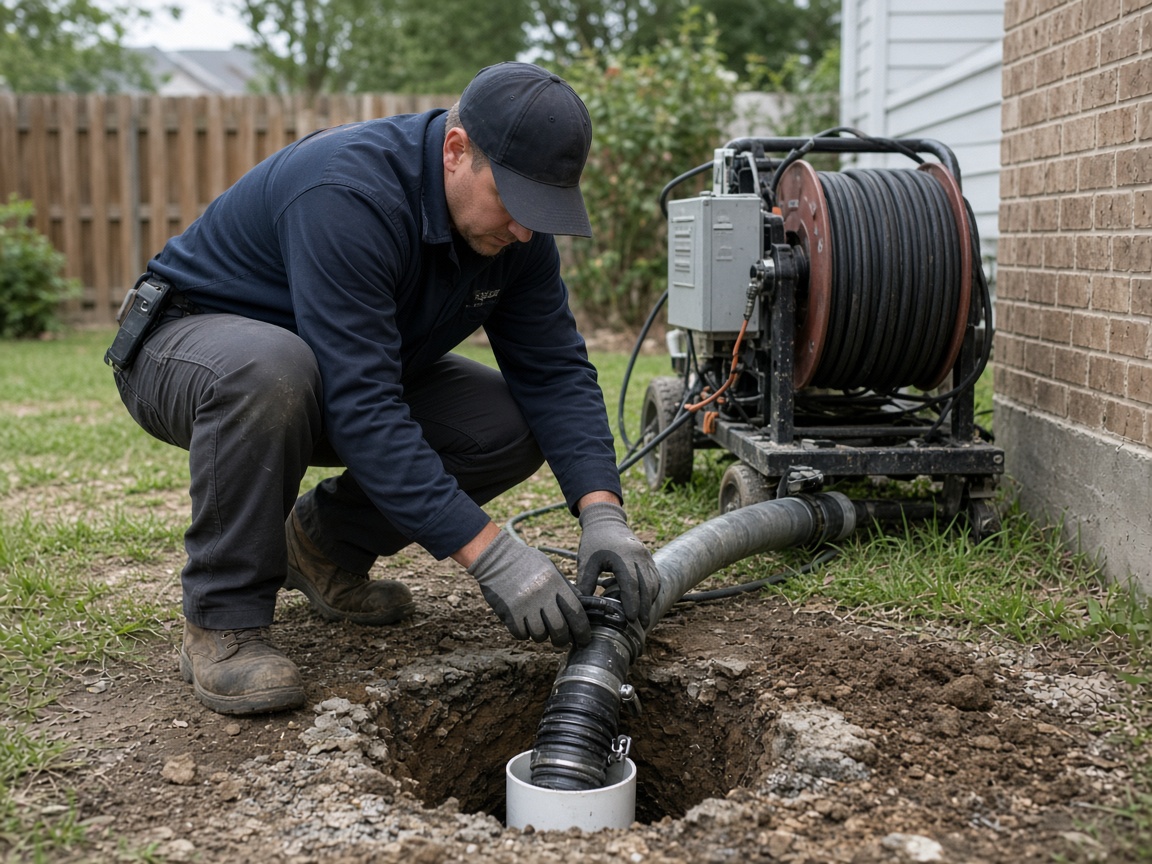
Denton’s older housing stock in the Oak Street Historic District and Southridge often features clay or cast iron sewer lines installed decades ago that crack when expansive soils shift. Hot summers dry the ground while spring thunderstorms dump heavy rain, pushing water into joints and accelerating root intrusion from nearby trees common along Northwood streets. The providers we connect you with use pipe bursting or cured-in-place lining to replace or rehabilitate sections without tearing up driveways or yards near the Denton Courthouse-on-the-Square. These methods work well on the county’s typical 4- to 6-inch lines but require careful camera mapping first because utility crossings and shallow bury depths in flood-prone pockets around Corinth and Lewisville can complicate pulling equipment. Homeowners in Sanger and Lewisville see similar issues when mild winters fail to freeze the ground enough to stabilize shifting clay.
Trenchless work in Denton County demands attention to local terrain and water tables that rise quickly after storms. Providers assess whether the line runs under mature oaks in Downtown Denton or crosses sandy pockets near the University of North Texas campus before choosing bursting versus epoxy lining. Bursting suits collapsed sections common in 1950s-1970s builds in Southridge while lining works better on offset joints caused by soil movement. Access pits are placed only at cleanouts or strategic points to avoid disturbing historic paving or landscaping. Spring rains often reveal problems when backups hit during peak thunderstorm season, so providers schedule around weather windows to keep equipment stable on saturated ground.
Code compliance in Denton requires permits for any sewer work that ties into city mains, and the providers we connect you with coordinate inspections to confirm new liner or pipe meets slope and material standards. They also check for illegal connections or grease buildup that frequently appears in older Northwood properties. Because the area sits on variable clay that expands and contracts, they sometimes install cleanout risers at grade to allow future jetting without re-excavation. This approach reduces surface restoration in tight lots near the Denton County Courthouse while addressing the root cause of repeated backups after heavy rains.
Technician insight
In Denton, the thing that catches most people out with Trenchless Sewer Repair is the expansive clay around the Denton County Courthouse and Oak Street Historic District that keeps shifting after spring thunderstorms, often turning a simple lining job into a partial bursting job when the camera shows new offsets the next day.
Southridge backup after heavy rain
A homeowner in Southridge called after a spring storm caused repeated backups. Camera work showed a collapsed clay line under the driveway caused by soil movement. The provider used pipe bursting from two small pits at the cleanout and rear yard, pulled new HDPE through, and restored the surface the same week.
How it works
- 1
Initial Camera Inspection
A provider runs a camera through the line from an existing cleanout to map breaks, roots, and offsets common in Denton clay soils.
- 2
Access Planning
Small entry and exit pits are located at cleanouts or strategic points to avoid disturbing yards in historic districts like Oak Street.
- 3
Pipe Rehabilitation
Pipe bursting or cured-in-place lining replaces or seals the damaged section without full trench excavation.
- 4
Final Testing and Restoration
Post-repair camera footage confirms flow, then pits are backfilled and compacted to match surrounding grade.
Pricing
Cost depends on line length, depth, soil conditions around Southridge and Northwood, and whether bursting or lining is required.