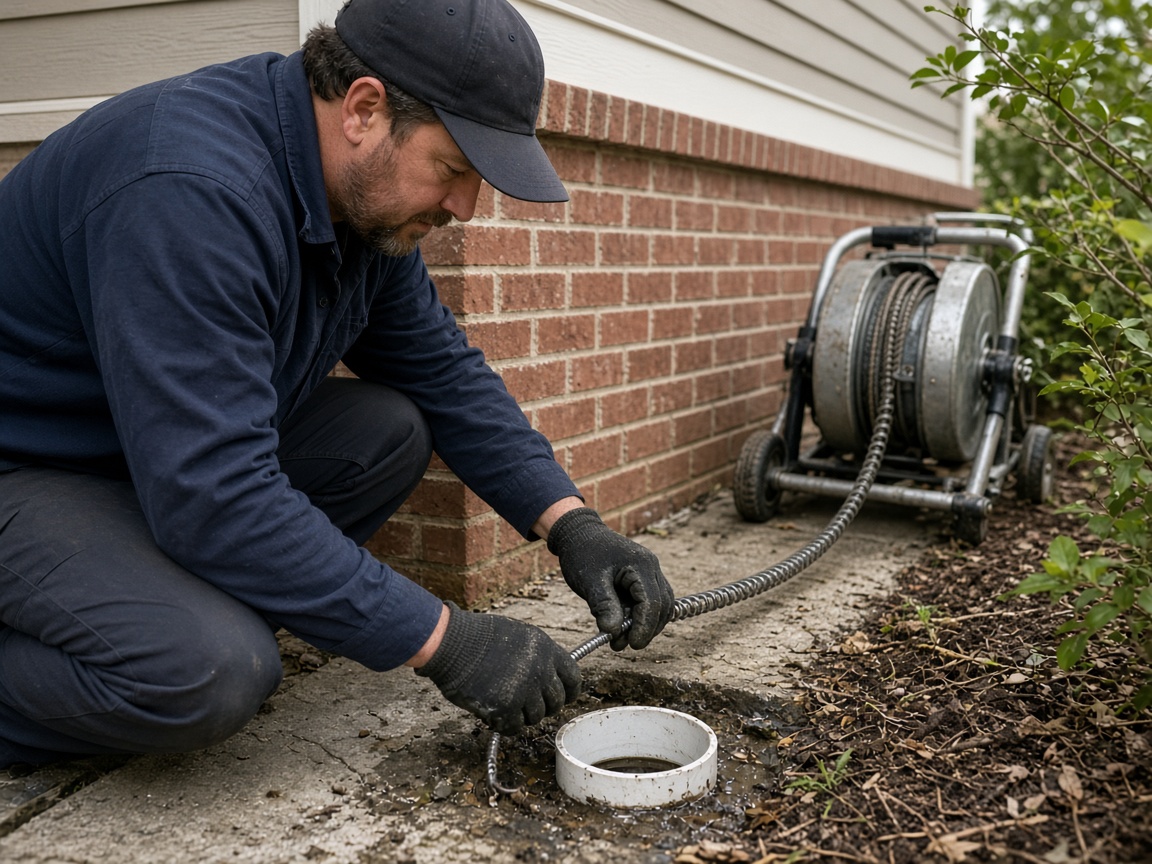
Denton homes built before the 1970s in the Oak Street Historic District and around the Denton Courthouse-on-the-Square often have clay or cast-iron lines that crack or collect roots from mature trees common along Southridge streets. Providers we connect you with use camera inspection first to locate the exact restriction without unnecessary excavation, then select the right head for the pipe material so they do not damage already fragile joints. Spring thunderstorms drop several inches of rain in hours, pushing sediment and debris into main lines that run under flat lots near the University of North Texas campus.
Mild winters keep soil active year-round, so roots continue growing into small cracks even when temperatures stay above freezing. The providers we connect you with carry sectional machines sized for 3-inch to 6-inch laterals typical in Northwood and Southridge neighborhoods, plus hydro-jetting equipment for grease buildup from nearby restaurants along Teasley Lane. They also check cleanouts at the property line before starting, because many Denton County homes added after 1990 have two-way cleanouts that let them clear the city side without digging.
Heavy clay soils throughout Denton County hold water against pipes, increasing external pressure during thunderstorms and making partial blockages turn into full backups faster than in sandy areas. The providers we connect you with carry root-cutting blades matched to local tree species and finish every job by running water from multiple fixtures to confirm flow rather than relying on a single test. They note any offset joints they see on camera so homeowners can plan future repairs before the next heavy rain event.
Technician insight
In Denton, the thing that catches most people out with Drain Cleaning is how fast a partial root clog in the Oak Street Historic District turns into a full backup once spring thunderstorms hit; the clay soil holds water against old clay pipes, so the line never gets a chance to dry out between rains.
Southridge Backup After Storm
A homeowner in Southridge noticed slow drains after two inches of rain. The provider located roots at a cracked joint 40 feet from the cleanout. Sectional cable with a root cutter cleared the line, and camera footage showed the offset joint that will need attention before the next heavy rain.
How it works
- 1
Initial Assessment
The provider arrives and reviews the symptoms while checking accessible cleanouts at the home and property line.
- 2
Camera Inspection
A waterproof camera is fed through the line to locate the clog, identify pipe material, and note any root intrusion or offsets.
- 3
Clear the Restriction
The correct cable machine or hydro-jetting head is selected and run until water flows freely from the affected fixtures.
- 4
Final Verification
Multiple fixtures are run simultaneously and the line is re-inspected to confirm the restriction is fully removed.
Pricing
Cost depends on line depth, access, and whether roots or grease require specialized heads.