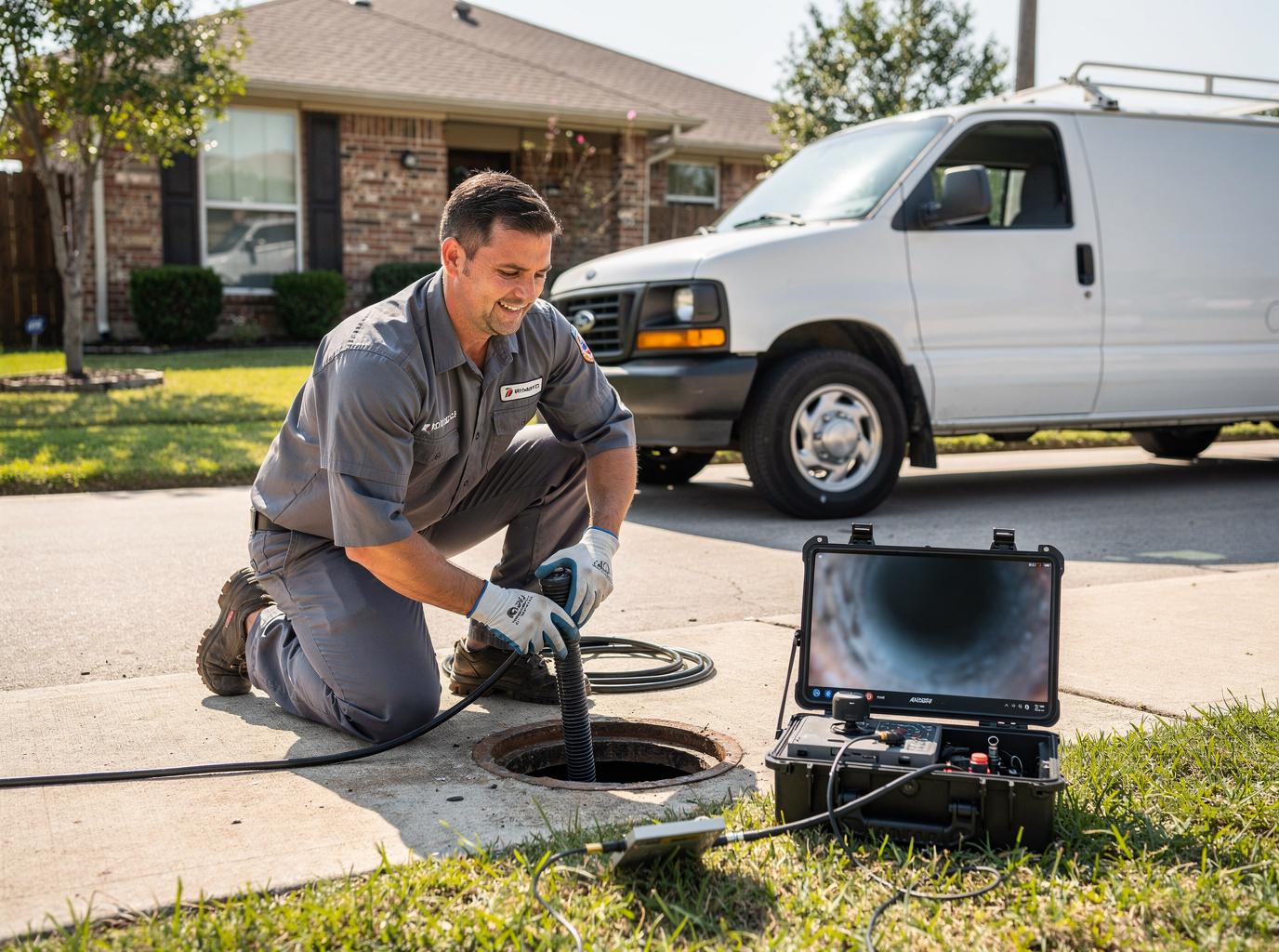
Denton homes built before the 1970s in the Oak Street Historic District and around the Denton Courthouse-on-the-Square often have clay or cast-iron sewer lines that shift with the area's expansive clay soils. Spring thunderstorms saturate the ground and push tree roots toward those pipes, creating offsets and intrusions that only a camera can confirm without digging up yards. Providers we connect you with run the camera from the cleanout at 1333 Teasley Ln addresses or nearby access points, recording footage that shows exact distances and conditions so repairs stay targeted to Southridge or Northwood streets.
Hot summers dry the soil and can widen existing cracks while mild winters keep roots active year-round. When lines run under driveways or near the University of North Texas campus, the camera must navigate multiple 45-degree bends that older four-inch clay sections create. The providers we connect you with note pipe material changes, bellies that hold water, and any grease buildup common in homes feeding into the Denton County Courthouse area, giving homeowners a clear map before any excavation begins.
Edge cases appear when lines cross property boundaries in neighborhoods bordering Corinth or Lewisville, where one camera run must satisfy both Denton and county requirements. Providers document every joint and defect on video so plumbers can plan point repairs instead of full replacements. This approach avoids unnecessary disruption to established landscaping and keeps work within the original trench lines that were dug decades ago.
Technician insight
In Denton, the thing that catches most people out with Sewer Camera Inspection is the bellies that form in clay lines under Southridge yards after repeated spring thunderstorms; the camera shows standing water that never drains, yet homeowners assume the problem is only a clog until the next heavy rain backs everything up.
Inspection on Northwood Street
A homeowner in Northwood reported slow drains after spring rains. The camera revealed a root intrusion and offset joint 38 feet from the cleanout. The provider marked the exact location on video so a targeted repair could be performed without tearing up the entire front yard.
How it works
- 1
Schedule Access Point Review
The provider confirms the cleanout location and any known history of the line serving the property in Denton.
- 2
Camera Insertion and Recording
The camera travels the sewer line while the provider records footage and notes distances to defects.
- 3
Defect Mapping
Each issue is marked on the video with measurements so the exact repair spot can be identified later.
- 4
Report Delivery
Homeowners receive the video file and written summary to share with any repair contractor.
Pricing
Pricing depends on line length, access difficulty, and whether the inspection covers properties near the University of North Texas or older historic districts.